Media Strikes Back · Unit 2 · Symbolic Codes
Frame Forensics
every frame is a crime scene of choices
Nothing inside a film frame is there by accident. The setting, the objects, the costume, the colour, the way a body is held — someone chose all of it, and every choice carries meaning. Work the four case files, learn to read the evidence, then pass The Final Read to earn your Symbolic Codes certificate.
The case board
Four case files. One final read.
Work the cases in any order. Crack all four to unlock The Final Read — pass it and the certificate is yours.
The brief
Setting is the world a story happens in — its place, its time, and the context the two create. A setting is rarely just a backdrop: where and when a story happens changes how we read everything inside it.
Beat 1 · The three ingredients
Three frames. For each, name the ingredient of setting that's doing the heavy lifting.
Beat 2 · What a setting can do
A strong setting works — it can be an extension of character, build mood, create tension, or grow so essential it becomes a character itself. Read each frame and name the job.
The brief
Mise en scène (French: "everything within the frame") is how a shot is arranged — four departments working together: set design, costume, hair & make-up, props, and visual composition.
Beat 1 · Sort the evidence
Eight pieces of evidence from real films. Tap a card, then tap the department it belongs to.
Beat 2 · Pause the frame
10 Cloverfield Lane (2016). Howard has "rescued" Michelle into his bunker. One frame — five pieces of evidence. Find every glowing marker and read what it's telling you.
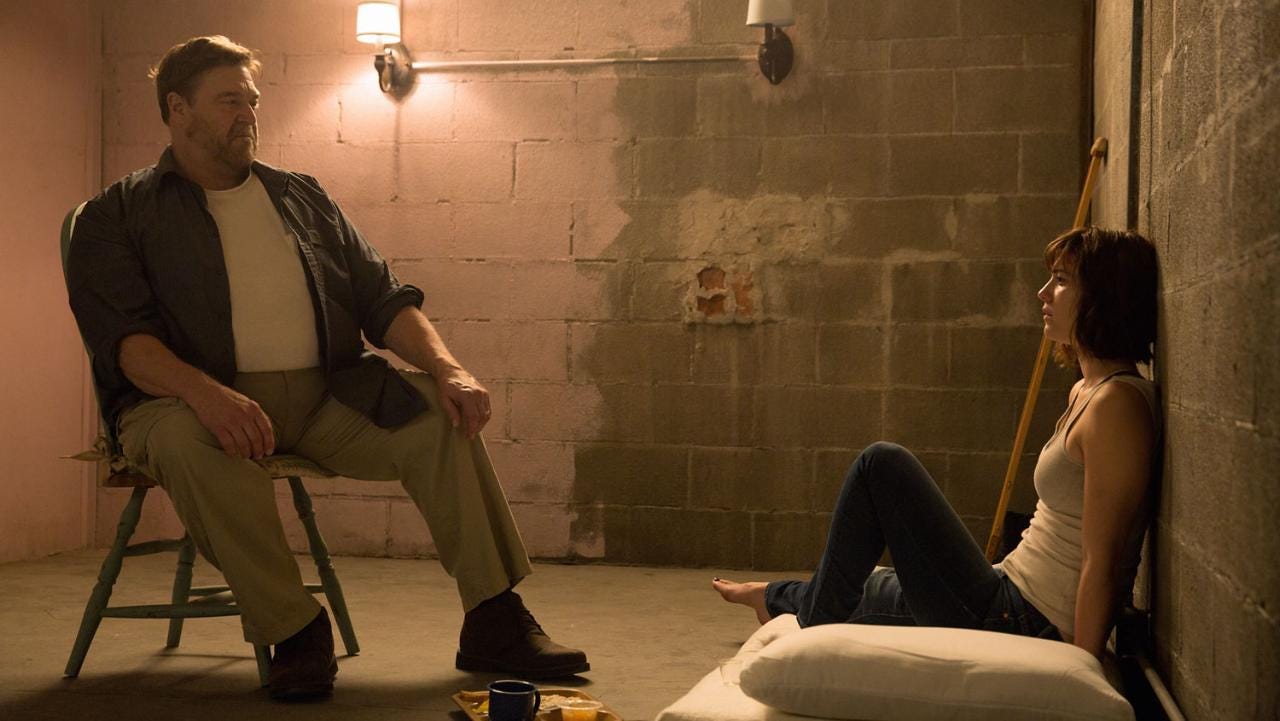
Tap a marker on the frame to open the evidence.
Beat 3 · Special props
Two prop types worth naming: a motif recurs until it carries meaning; a MacGuffin exists only to drive the plot. Call each one.
The brief
A performance is constructed — every glance and pause is a choice. Four instruments: facial expression, gaze, body language (gesture · posture · contact) and movement.
Beat 1 · Know the instruments
Match each instrument to what it does. Tap one from each column to pair them.
Beat 2 · Read the performance
For each frame: first name where the meaning lives, then make the read.
Beat 3 · Two styles, one staircase
The Shining (1980). Watch the clip: Wendy backs up the stairs swinging the bat while Jack advances. Two completely different acting styles collide.
The Shining (1980) · dir. Stanley Kubrick — a frightening scene; look away if you need to
The brief
We feel colour before we've consciously read anything else in the frame. Filmmakers control it in the grade — the colour adjustment done in post. Now you're the colourist.
Beat 1 · The grade
One classroom, three briefs. Drag temperature and saturation until the frame matches the brief, then submit your grade.
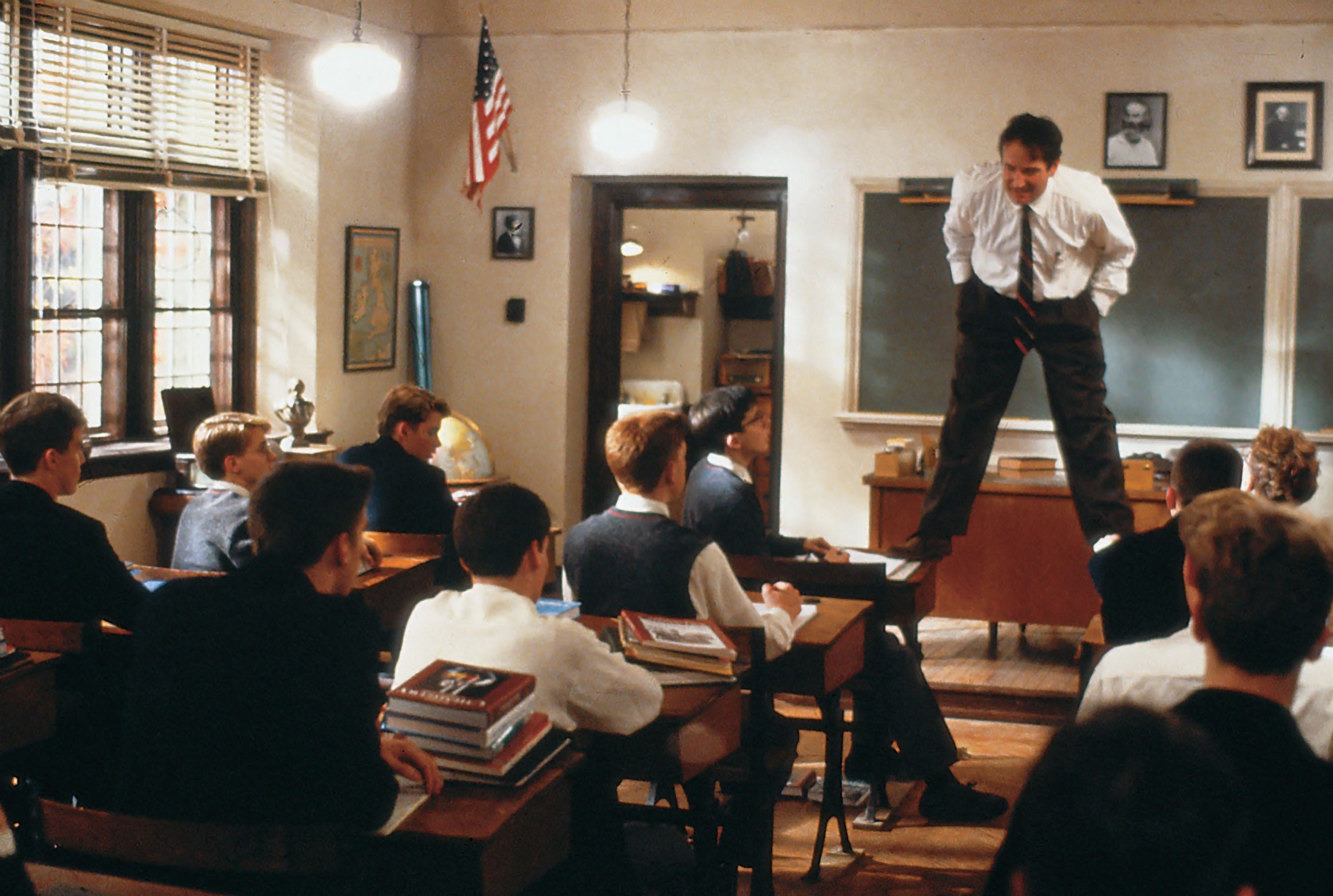
Brief 1 of 3
Beat 2 · Colour speaks
Every colour carries connotations (always shaped by context and culture). Pair each colour with its most common screen meanings.
Beat 3 · Read it in the wild