
Manipulated · Episode 01 · Symbolic codes
The Field Test.
Six frames, read cold. No timer — just you and what was put in front of the camera. Get all six and the certificate is yours.
-
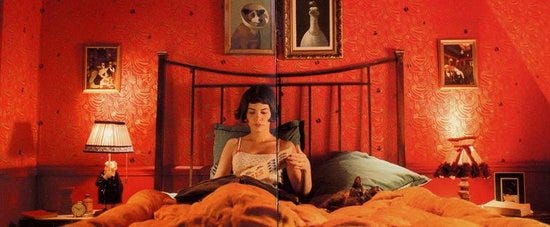
Amélie’s bedroom — warm reds, fairy-light glow, hand-made clutter on every surface. What is this setting doing?
A setting can be a portrait of the person who lives in it. Amélie’s whimsical, hand-made room characterises her before she says a word — that’s setting as an extension of character.
-
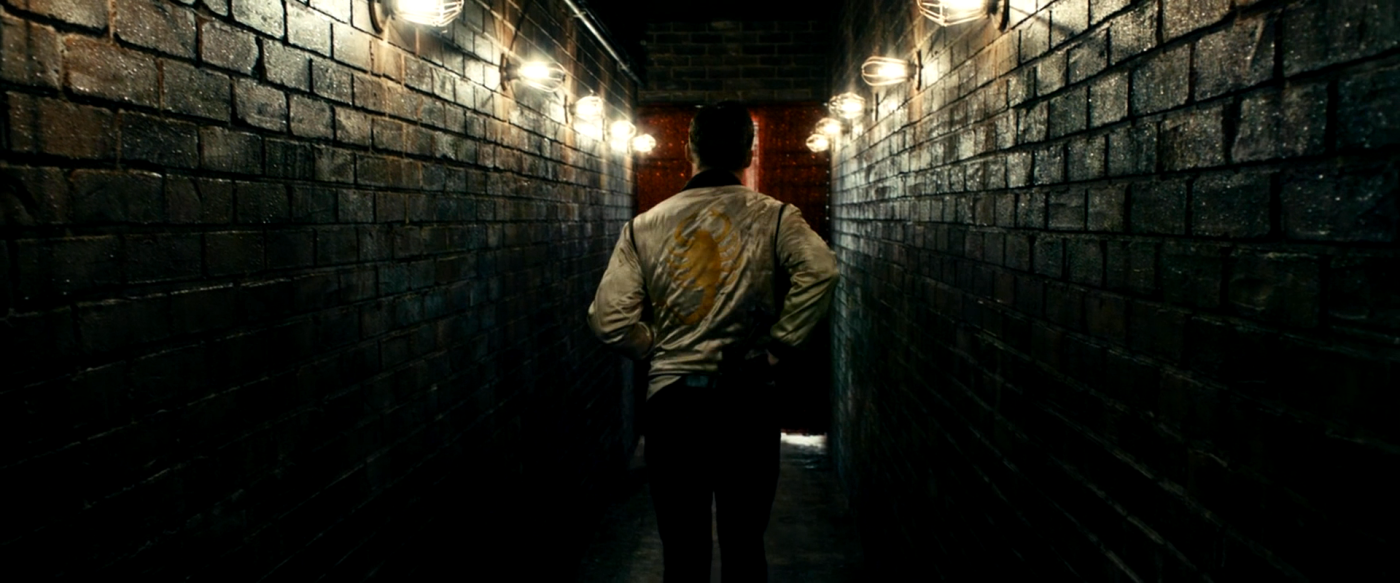
The Driver’s white satin scorpion jacket. As a piece of costume, what work is it doing?
Costume is the most direct read on a character — status, persona, allegiance. The scorpion jacket is characterisation you can see, and its gathering stains chart the story.
-

Look at this face — lowered brows, clenched jaw. Which symbolic code is carrying the meaning here, and how?
The camera is built to catch the face. Facial expression — start with the eyebrows — communicates pain here without a single line of dialogue. That’s acting as a symbolic code.
-
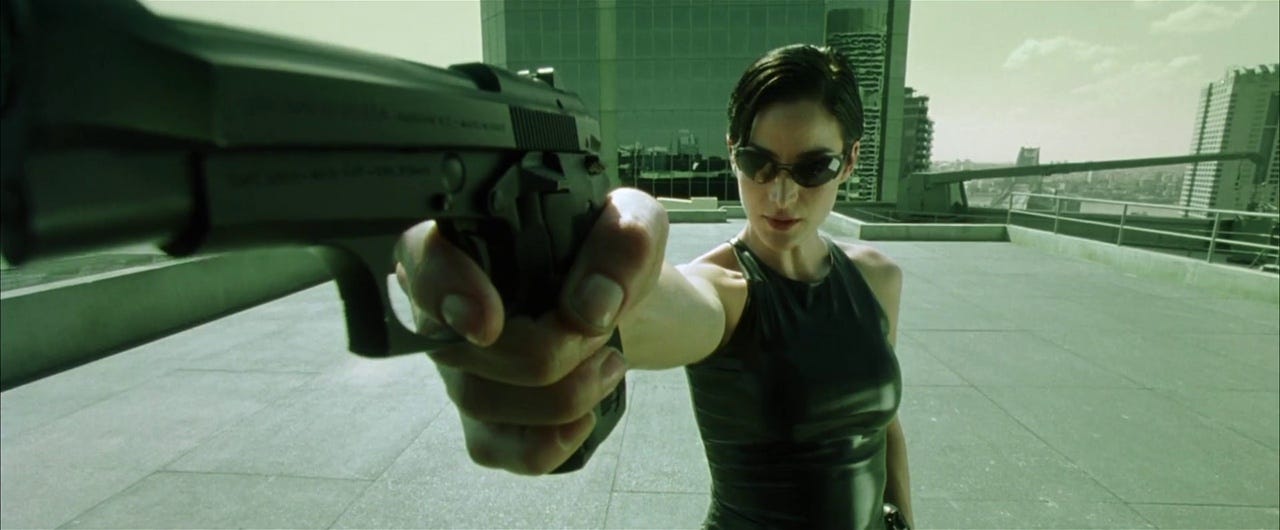
The Matrix grades its simulated world a dirty green. What is that colour choice connoting?
A dominant colour sets the mood of a whole world. Green can connote nature — or sickness and wrongness. The grade tells us this reality is fake before the plot does.
-
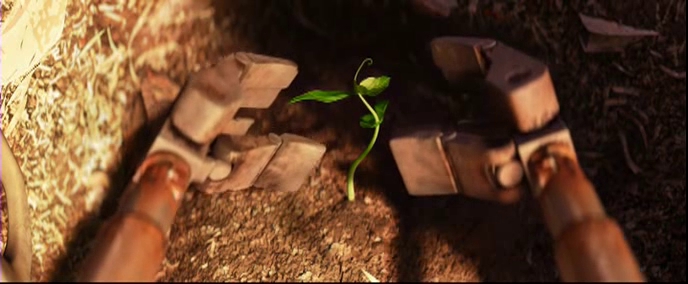
One small green plant, dead centre of the frame, emptiness all around it. Why do we instantly know it matters?
Visual composition tells us what to care about. Centre framing plus empty space works like a spotlight — the film’s whole theme delivered by placement alone.
-
Your shoot: the audience must know your character is dangerous before they speak. Using only symbolic codes, what do you reach for?
Symbolic codes are what’s in front of the camera: costume, props, setting, colour, performance. Shutter and ISO are technical codes; a voice-over is a written code.
✓ Mastery check passed — nice work.
Film stills quoted for education and review.