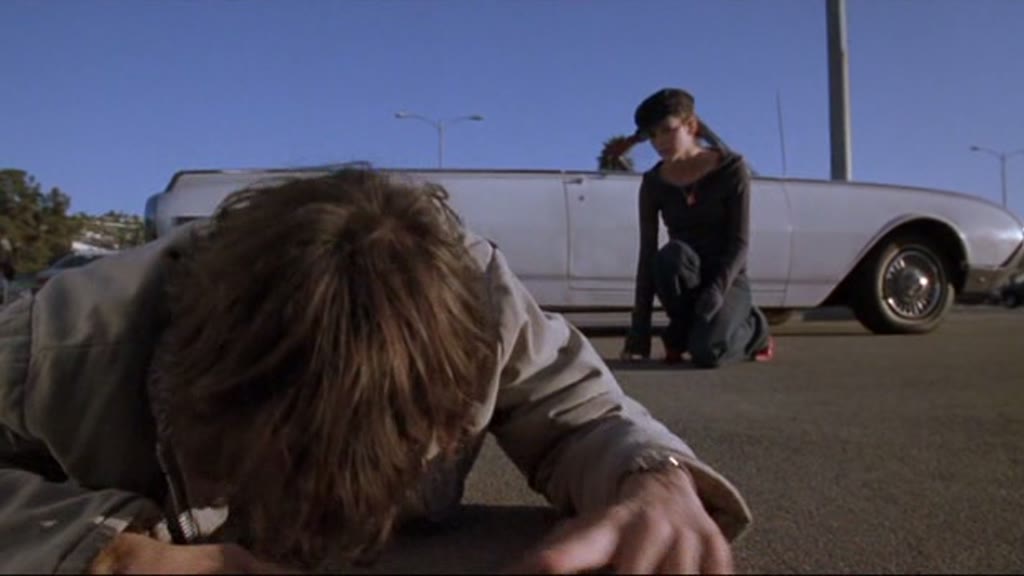
Playback / Me and Earl and the Dying Girl
Me and Earl and the Dying Girl · 2015
Doomed Friendship
This clip lives on an external page.
Watch the scene →A wide fisheye warps the room, keeping the audience at an awkward emotional distance.
Watch for
- The extreme wide-angle (fisheye) lens bowing the straight lines of the room outward at the edges of the frame.
- How the distortion holds the two friends slightly apart and makes the space feel off, even though nothing dramatic happens.
- The way the lens keeps us at arm's length — observing the friendship rather than feeling inside it.
A worked reading · COCA
CContention
Gomez-Rejon uses an extreme wide-angle lens to keep the audience at a deliberate, uncomfortable emotional distance from the friendship.
OObservation
The scene is shot on a fisheye lens that warps the room's straight lines and exaggerates the empty space between the two characters.
CConnotation
The unnatural curvature signals that something is not quite right and refuses us the cosy intimacy a normal lens would offer.
AAudience
We watch the relationship as detached observers rather than participants, so its eventual loss lands as something we were always being held back from.
Your turn
- How does the fisheye lens change the way the room and the characters look? What feeling does that create?
- Why might a director deliberately make a scene feel slightly uncomfortable to watch?
- Compare this to a scene shot on a standard lens — what is gained, and what is lost?
For teachers
A clear, single-technique example of how lens choice shapes feeling, not just look. Pairs with the Camerawork page (lens choice). This clip is currently an external link — drop a copy on the drive if you want it branded.