Playback / Jaws
Jaws · 1975
First Attack
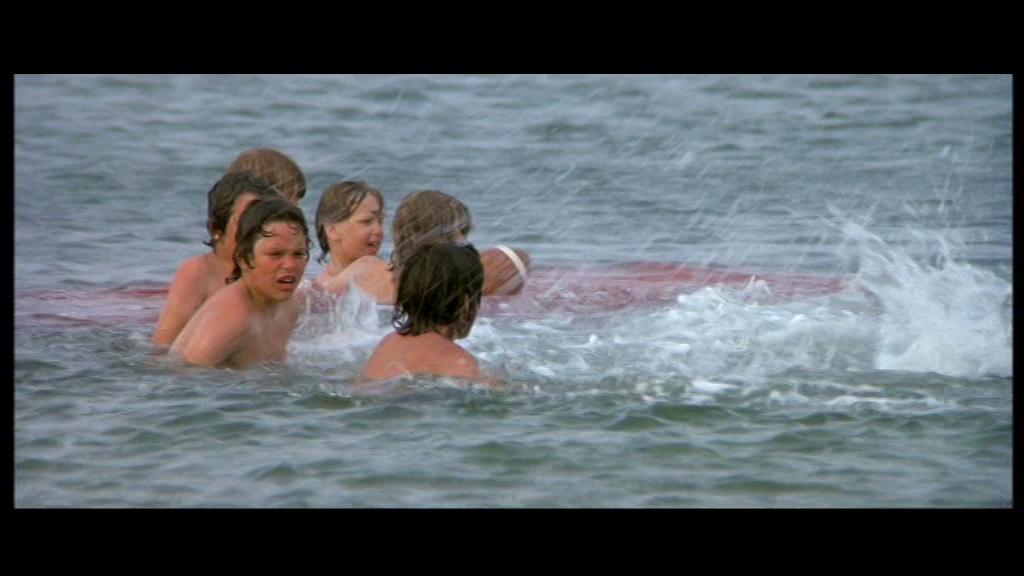
Spielberg withholds the shark and lets sound and a dragging, struggling swimmer carry the terror — the threat is everywhere and nowhere.
Watch for
- How little you actually see — the terror is carried by sound and the swimmer's struggle, not by the shark.
- The contrast between calm, diegetic night sounds and the sudden violence dragging her under.
- The arrival of John Williams's non-diegetic motif, and what it makes you feel.
A worked reading · COCA
CContention
Spielberg builds the opening terror almost entirely through sound, keeping the shark invisible.
OObservation
As the swimmer is attacked we see her thrashing at the surface but never the shark; the horror is carried by her cries, the churning water and the score.
CConnotation
Hiding the predator and letting sound do the work makes the threat feel everywhere and unknowable — far more frightening than a clear look would be.
AAudience
We supply the monster from sound alone and learn, in the first minutes, to dread the water — conditioning that powers the rest of the film.
Your turn
- How much of the shark do you actually see? What is creating the fear instead?
- Identify one diegetic and one non-diegetic sound in the scene. What does each contribute?
- Why is an unseen threat, carried by sound, scarier than one we can see clearly?
For teachers
A perfect introduction to diegetic vs non-diegetic sound and the power of the unseen. A frightening opening — preview for younger classes. Pairs with the Audio page.