Playback / Rebecca
Rebecca · 1940
Why She Was Still Smiling
A confession told to an empty room, the camera tracing a dead woman who is never shown.
Watch for
- That there is no flashback — the film refuses to cut away to what is being described.
- How the camera moves through empty space, following Rebecca's path as though she were walking it.
- The way the furniture becomes blocking for an absent performer.
A worked reading · COCA
CContention
Hitchcock stages a flashback without a flashback, using camera movement alone to put a dead character in the room.
OObservation
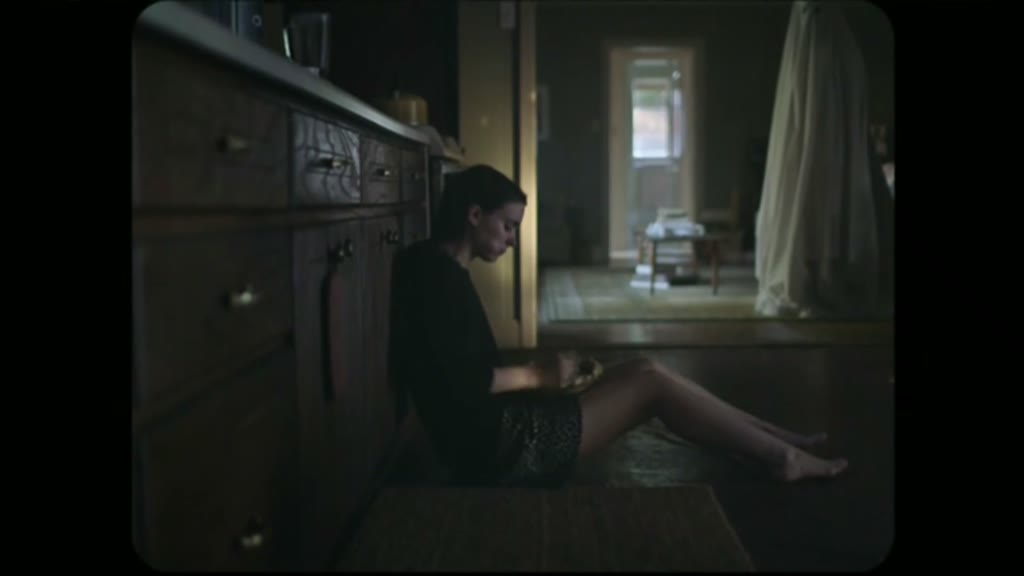
As Maxim recounts the night of Rebecca's death, the camera drifts through the boathouse tracking her movements across empty floor, pausing where she stood, while he narrates from the edge of frame.
CConnotation
Moving the camera along her path makes her presence a fact of the space rather than an image, so she haunts the scene without ever being cast.
AAudience
We are made to imagine her ourselves, which is more unsettling than being shown, and keeps her the film's central absence.
Your turn
- Why refuse to show us the event being described?
- What is the camera following, if there is no actor there?
- How does this compare with a conventional flashback? Which is stronger, and why?
For teachers
An elegant demonstration that camera movement is a storytelling choice, not decoration. The softest source in this batch (512×384) — fine projected small, weak on a large screen.