Playback / The Godfather
The Godfather · 1972
Horse Head
A slow camera move toward the bed delays the reveal, letting horror build before the cut.
Watch for
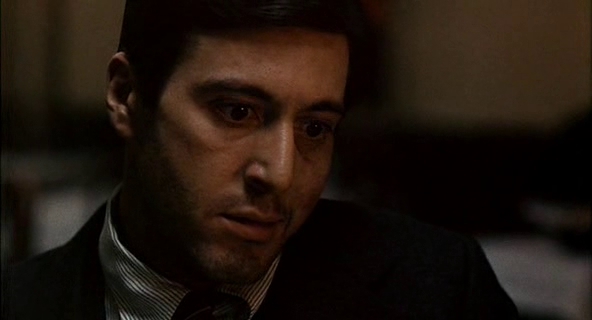
- The slow, creeping track-in toward the bed — the camera advances before Woltz does, pulling us toward a reveal we already dread.
- How the scene delays the horror — we get Woltz's confusion and the spreading red stain before we understand what he is lying in.
- The shift from warm, palatial calm to violation, the camera turning a luxurious bedroom into a crime scene.
A worked reading · COCA
CContention
Coppola uses camera movement to make the audience discover the horse's head a beat before Woltz does, so the dread is ours first.
OObservation
The camera tracks slowly in toward the bed as Woltz wakes, advancing on the bloodstain while he is still half-asleep and uncomprehending.
CConnotation
The unstoppable forward movement feels like a predator closing in, withholding the reveal just long enough to make us lean toward it.
AAudience
We are placed ahead of the character, helpless and complicit, so the shock lands as a sickening confirmation rather than a surprise.
Your turn
- How would the scene feel different if it opened on a static wide shot of the whole bed instead of moving in slowly?
- Why does delaying the reveal make the horror stronger than showing it immediately?
- What does the setting — Woltz's opulent mansion — add to the meaning of the violation?
For teachers
A tight, single-technique example of how camera movement controls a reveal and builds dread. Pairs with the Camerawork page; suits Year 9–10 and senior film analysis. Note the brief image of the horse's head — preview before showing younger classes.