Media Codes & Conventions / Technical codes
Technical codes
Editing
Editing is the technical code of selecting and joining shots and sounds into an order that tells the story, controls rhythm and shapes the audience’s emotional response.
Editing is the selection, ordering and timing of shots — the stage where a film is finally assembled. It is often called the invisible art, because when it is done conventionally the audience stops noticing the cuts altogether. Yet editing is where much of a film’s meaning, rhythm and emotion is built: the same footage, cut two different ways, can produce tension or comedy, clarity or chaos.
The foundational idea is juxtaposition — that two shots placed side by side create a meaning neither holds on its own. The Soviet filmmaker Lev Kuleshov showed this by intercutting one neutral face with a bowl of soup, a coffin and a child; audiences praised the actor for “expressing” hunger, grief and tenderness, though the face never changed. Editing, in other words, is where the audience is taught how to feel.
Editing works hand in hand with camerawork — an editor can only join the shots the camera provides — and it is the engine behind the form conventions of continuity. There are five things to look for:
- Continuity editing — joining shots so time and space stay smooth and legible.
- Montage — compressing time, or building an idea, through a run of short shots.
- Parallel editing — intercutting two actions to connect them.
- Rhythm and pace — how shot length controls a scene’s tempo.
- Structuring of time — bending chronology through flashback, ellipsis and slow motion.
Continuity editing
Continuity editing is the dominant system of mainstream film and television. Its whole goal is to make the cuts disappear so the audience forgets the construction and falls into the story. It does this with a toolkit of conventions:
- The establishing shot opens a scene wide so we know where we are before we move closer.
- Shot / reverse shot cuts back and forth between two speakers — the conventional grammar of a conversation.
- The eyeline match cuts from a character looking to the thing they see, so we share their attention.
- Match on action hides a cut inside a movement — a character reaches for a door in one shot and the door opens in the next — so the eye glides over the join.
- The 180-degree rule keeps the camera on one side of an imaginary line (the axis of action) so screen direction stays consistent and the space never confuses us.
When these rules are followed, a scene feels effortless and real. When they are broken — a deliberate jump cut, a crossed line — the audience feels the jolt, which is sometimes exactly the point.
Montage
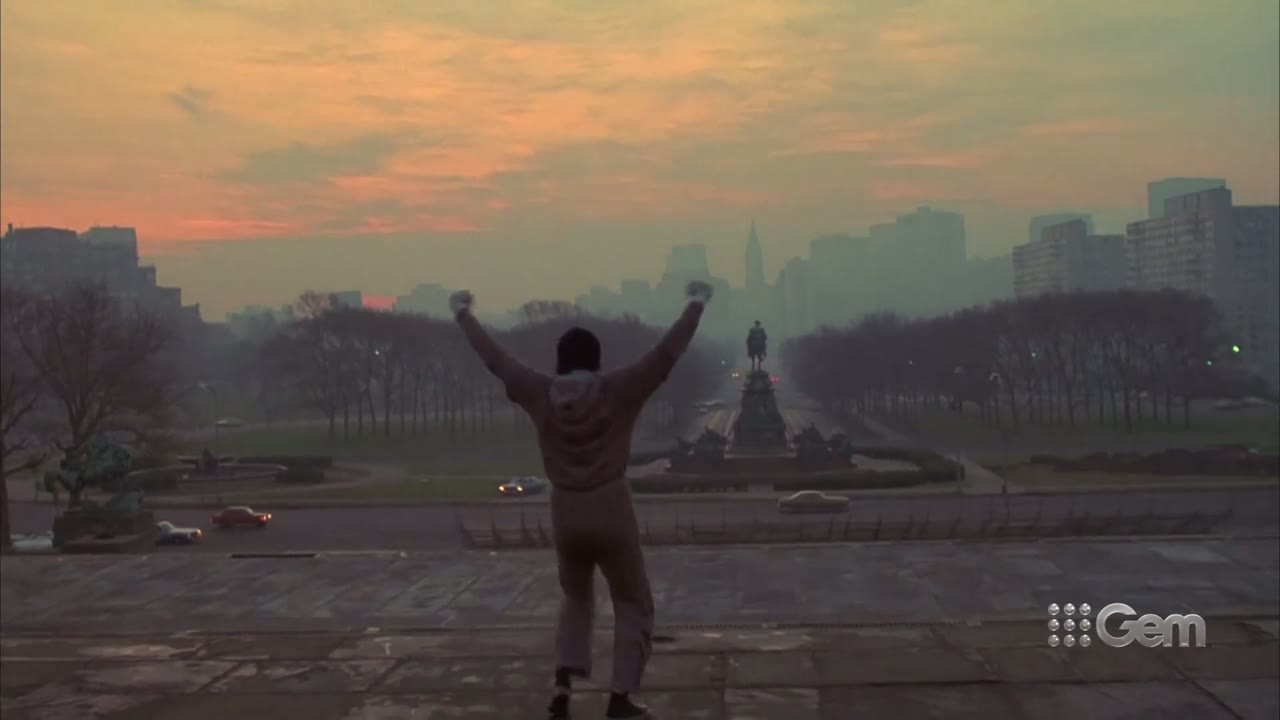
A montage compresses time, space or an idea into a sequence of short shots. The convention is so familiar we read it instantly: the training montage that turns weeks of work into a minute (Rocky), the passage of years that ages a marriage in silence (the opening of Up), the getting-ready montage before a big night.
It is worth separating two traditions. Hollywood montage mostly compresses time and keeps the story moving. Soviet montage — the theory Sergei Eisenstein built from Kuleshov — collides shots to force a new idea in the viewer’s head, as in the Odessa Steps sequence of Battleship Potemkin. Both rely on the same principle: meaning made by sequence, not by any single image.
Parallel editing
Parallel editing, or cross-cutting, intercuts two or more separate lines of action to imply they are happening at the same time — or to invite us to compare them. It is the engine of suspense in the classic race-to-the-rescue, cutting between the tied-up victim and the speeding hero so we feel the clock.
Used for contrast it becomes devastating. In The Godfather (1972) the baptism where Michael renounces “Satan and all his works” is cross-cut with the assassinations he has ordered — the sacred and the murderous bound together by the edit alone.
Rhythm and pace
Shot length is the editor’s heartbeat. Fast cutting — many short shots in quick succession — generates energy, disorientation or excitement, the signature of action cinema such as Mad Max: Fury Road and the Bourne films. Slow cutting and the long take — holding a shot, or staging a whole scene in one unbroken move (Children of Men, 1917) — builds tension, realism and immersion, and quietly dares you to keep watching.
Editors also cut to rhythm — timing the cuts to a musical beat or an internal tempo — so that pace itself carries feeling before a single word is spoken.
Structuring of time
Because the editor controls order, they control time. The flashback and flash-forward step outside the present; the ellipsis cuts out the dull or unbearable parts so we leap ahead; the jump cut (made famous by Breathless) lurches time forward within a shot; slow motion stretches a moment so we dwell on it. Whole films are built on reordered time — the reverse chronology of Memento, the shuffled chapters of Pulp Fiction — turning structure itself into the story’s meaning.
Analysing editing with COCA
A strong analysis names a Contention, supports it with an Observation, explains the Connotation, and connects it to the Audience.