Playback / Slumdog Millionaire
Slumdog Millionaire · 2008
Dead Mum
A memory forces its way into the present, and the edit refuses to keep them apart.
Watch for
- How the cut moves between time frames without signalling the change.
- The saturated colour and handheld camera marking the remembered material.
- How the sequence is anchored to one character's head rather than to events.
A worked reading · COCA
CContention
Boyle uses subjective editing to make memory an intrusion rather than a flashback.
OObservation
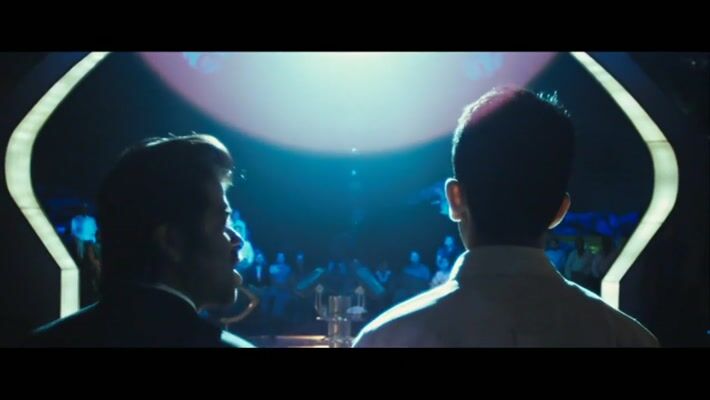
The present-day interrogation gives way to the riot in which Jamal's mother is killed, cut abruptly and shot handheld in heightened colour, then returns without warning.
CConnotation
Refusing a conventional transition codes the memory as involuntary, something happening to the character rather than something he chooses to narrate.
AAudience
We are placed inside his recall, so the audience experiences the past as pressure on the present rather than as background.
Your turn
- How do you know when you have moved in time? What are the visual cues?
- Why not use a conventional dissolve or caption?
- Whose memory is this, and how does the editing tell you?
For teachers
A strong subjective-editing example and a good companion to the Slumdog opening. Depicts communal violence and a child's bereavement — preview and frame it.